


There is one reason that those who are publicly involved in the paranormal must be honest: people take them seriously and often look to them for real answers regarding the afterlife and the reality of the spirit world. It’s a large burden to bear, and if you have a “show” or a “documentary” (the lines are blurred between these two genres, to the detriment of the viewing public), then you must be ethical and responsible in what you do, as the emotional well being of your clients frequently depend upon your good will and transparency.
Paranormal fakers and opportunists can ruin lives by manipulating the emotions and the beliefs of their victims. I have the same message for all the mediums out there, both famous and anonymous: lie to your clients, manipulate their faith and their trust in you, and you will pay the price through eventual online disclosure and the loss of something you cannot regain: your integrity.
It is not an excuse to say that the shows are intended as entertainment. These programs rely on the public taking their work seriously. For every faked piece of “evidence”, for every dishonest emotion, for every capitulation to a director or a producer who asks for “more drama”, I say: you are committing a crime against the people who look up to you, who believe in you, and who come to you for answers. You should never agree to fabricate anything when it comes to something as deeply personal and meaningful as afterlife communication.
I work as a medium in private sessions. I have also been under contract with a studio intending to produce a documentary or a “show” on my life and those of my teammates. We have all agreed to one, basic rule: no faking of evidence. Ever. Once you lose the trust of your audience, it’s nearly impossible to get it back. When I am reading for clients, some of what I do is based on observation: I tell them that. I explain that a successful reading involves observation, reading of emotional energies, deduction, inference, and then the facts and images that I cannot explain. When something I say is not based on paranormal information that I am picking up via processes that are not known to me, I say the following: “What I am about to tell you is based partly on observation and inference. It may or may not have any paranormal source. Sometimes, the source of the information is not even clear to me. I can promise you that I have no intention of deceiving you or pretending that I pick up is the absolute truth that you must follow regardless of how you feel about it”.
Honesty. It’s difficult to maintain when someone is directing you to be more “energetic” or “emotional”; especially difficult when someone above you–a camera operator or one of many people involved in a shoot–might be knocking on the floor or making your EMF meter go wild by pushing the button on the walkie. It takes a tremendous amount of integrity to resist the call to “dramatize” an otherwise mundane investigation, but I can promise you, resist you must. I lost opportunities to be on television (more than once) because I refused to “follow direction”, which amounted to lying. I won’t pretend that a spirit possessed me if it did not happen; someone watching, or perhaps many people watching, would have believed me and possibly prayed for me under false pretenses. Pretending to have experienced something that didn’t happen is a form of mass gaslighting and narcissistic abuse. I refuse to inflict emotional violence on anyone, as I know how it feels to be on the other side of that equation.
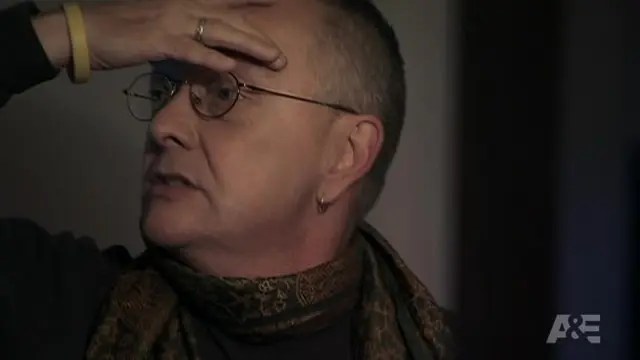
I am not accusing anyone pictured above or any particular paranormal program of lying or faking evidence. I am warning them against it. For they are playing not only with the souls of others, but with the ultimate fate of their own. As fun as it might be to watch, this is not a game.
–Kirsten A. Thorne, PhD

 International Society for Paranormal Research