
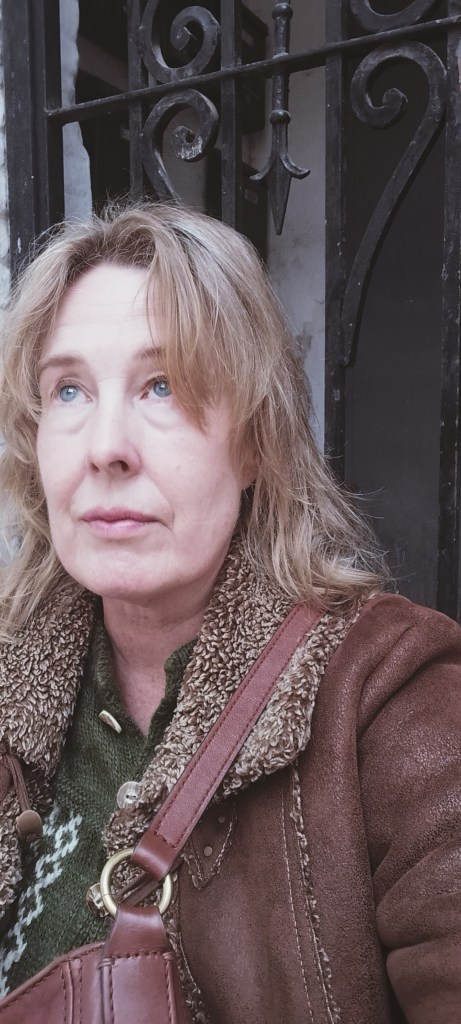
The neighborhood where I live with my husband in Granada, Spain, is called the Albaicín, and it’s in crisis. Speculators and investors have bought up family homes and are turning them into luxury hotels. The locals are being forced out or pressured to move via tactics with which I have become quite familiar. I am watching this UNESCO Heritage Site deteriorate as hordes of tourists block the streets, littering the river banks and driving local businesses into ruin. Old neighbors with long histories here tell me their stories; some hold out some hope, but many have given up on their roots and memories here and have left.
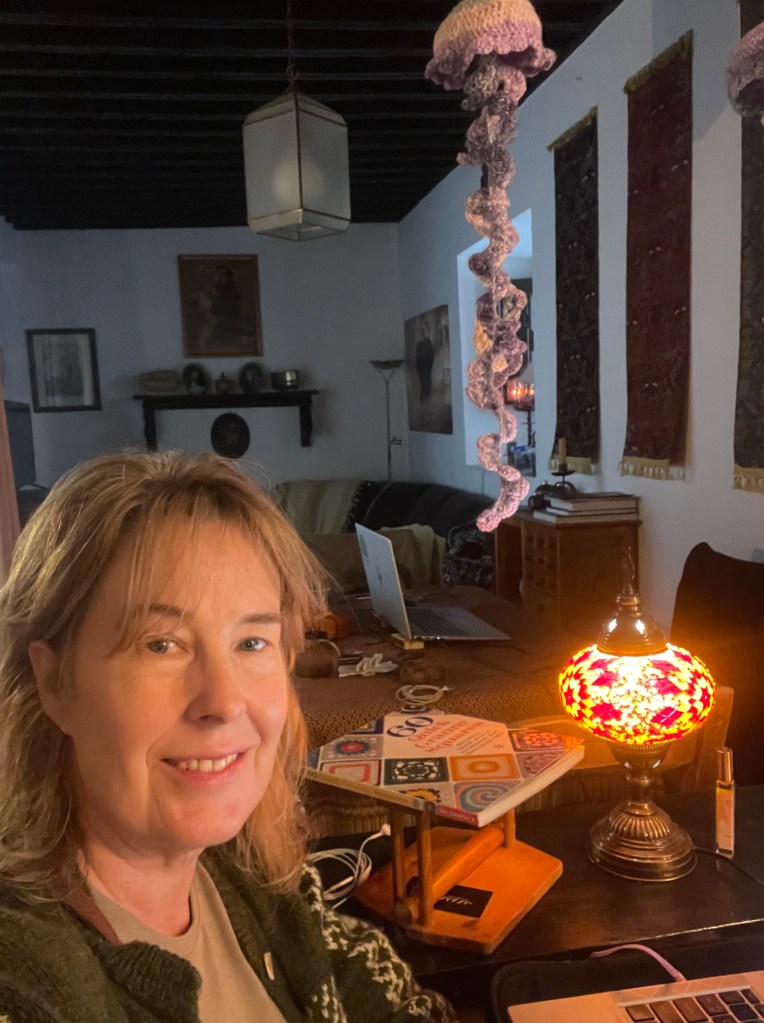
We have lived at our historic apartment building (with roots to the 16th Century) for almost five years. There are only two rented units now, as the owners have decided to sell the building and want it empty. They are asking a lot of money, and people are coming to see it. There are tricks that landlords use to force out tenants; many people here can attest to that. As much as I would love to expose these fraudulent practices, suffice to say that I am ready to break under the strain of potentially being forced out of the one place that feels the most like home in the world.
This is necessary background information for what I am going to write about next. As many of you probably know, when your living situation is threatened, depression often ensues. I am at a low point right now. When I get to that point, I go for a walk to save my mood. That is what I did yesterday. I ended up sitting on a step, in front of what looked like an abandoned building.
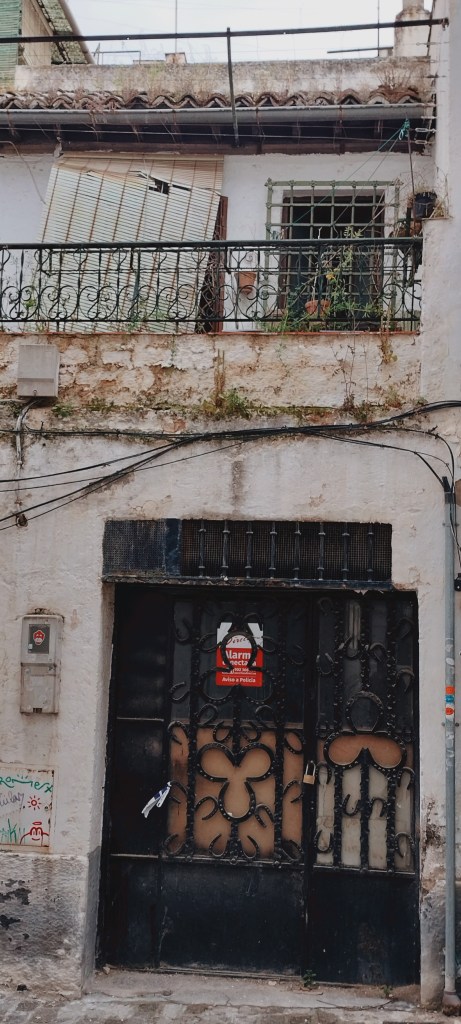
As I sat there, I had several distinct and odd physical sensations: vertigo and a prickly heat running along my back. I felt quite strongly that someone was behind me, attempting to touch me through the iron gate. I was so convinced that something was there, that I took a photo thinking that I would see something. Shortly after, I way Pedro, a fixture in the Albaicín and an acquaintance of ours who feeds the church cats. He has lived in the Albaicín for 41 years, and for most of those years, investors have tried to dislodge him from his 13th-Century compound. I never knew where he lived; I imagined he was somewhere on the top of the hill in an old Carmen (walled estate with ponds and gardens). When I saw him walking up the hill with keys in his hands, I was perplexed. Then, I realized that he lived in the building that I thought was abandoned, that one building whose stoop is where I had decided to contemplate the state of the world in general, and of Granada and the Albaicín in particular.
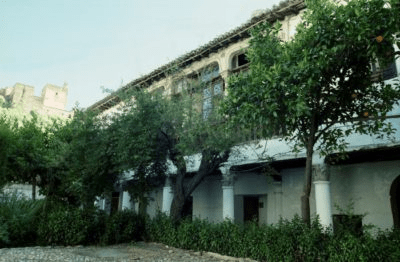
He asked if I would like to come in and see the cats; of course, I said yes, barely able to contain my shock that this particular building I had chosen was his home. As he unlocked the metal gate, I realized that we would both soon be locked in to an enormous compound where eight families had once lived. Nobody would know I was there, as cell reception was spotty. It was a gloomy, dark day with drizzle falling. The cats went wild when they saw Pedro. He had purchased the largest bag of cat food that I had ever seen. As he fed 12 of the 17, I looked at the overgrown garden, the broken panes of glass in the windows upstairs, in what appeared to be a Moorish design with an enclosed hallway with wooden casements and beams. The entire place seemed abandoned, yet he has lived there since 1985, the only “vecino” to refuse a buyout offer. There is no electricity, running water, or heat. I don’t know how he survives there, but he has managed.
The atmosphere was beyond oppressive; I felt eyes on me from all corners and a sense that someone in particular did not want me wandering through that Carmen. There were cavernous rooms separated by dank hallways with the occasional piece of rotting and broken furniture. The smell of urine and mold was overwhelming.
I was frightened by a feeling that someone in particular was watching everything happening in that courtyard, and I wanted to photograph the scene; however, as soon as Pedro saw my intention, he asked me to please cease immediately: no photos, no videos. I had no cell connection and felt utterly cut off from the human world outside those walls. Inside, the 13th Century lived on, and Pedro and I were utterly alone.
I was shaking at this point, as I felt the presence of someone quite dark and depressive. It seemed that both grief and despair had combined with the darkness of the overgrown corners and created a powerful ghost who was physically affecting me to the point of panic.
I started to speak: “I am feeling something here”, and Pedro interrupted me. “The ghosts. There are a lot of them. They are always watching me. They have me trapped (”me tienen pillado“). You are probably feeling the Hangman, the main executioner for the city of Granada in the 13th Century. Rumor has it that the Secretary for the Catholic King and Queen also lived here. The street is named after him (Calle Zafra). At night, I hear him, lamenting his fate and wandering around the courtyard. I tell him, that time is over, he is forgiven for his job as Hangman; it wasn’t his fault, he did not have a choice in the matter. But it makes no difference what I say; he still wanders moaning and crying through this building”.
As I followed him into the darkness towards an enclosed patio (where he kept the cats who were flight risks from his compound), I noticed rooms to my left with dark figures etched from the background gloom. I could not tell if my eyes had created humanoid creatures from hanging fabric, or if something was forming in the dark to contact me. I was even more horrified, however, that Pedro was here alone with his cats and disembodied presences that seemed to refuse to let him leave. I was disgusted by the smells, terrified by the massive labyrinth of halls and rooms filled with shadows, and utterly unable to shake the feeling that someone was touching my back. Electric shocks ran through my body, and I suddenly, as if needing to break a spell, wanted to leave there more than anything I have wanted in my life. At that moment, cell coverage returned, and my husband called: he was locked out of our apartment. Pedro let me out, thanked me for the visit, and said I could come back anytime. I ran home.
In the days since, I have found myself unhinged by that experience. I am crying, filled with anxieties and nameless fears, unable to sleep more than two hours at a time, and experiencing nightmares as never before. Last night, my husband heard me shuffling down the stairs three times, but it was not me; I was fast asleep. He saw a shadow move out of the corner of his eye, and he knew: our ghost was back.
Our ghost? I hope so beyond all measure. Our ghost, Darío, is a familiar and comforting fixture of the apartment. He protects us; but what I think about before falling into despair is that perhaps, maybe, that is not our ghost, but the Hangman, who followed me home, thinking perhaps that his lamentations, his guilt, might become mine, and he can finally leave this agonizing plane of existence, having transferred his horror to me.
They will kick out Pedro and build a tourist hotel. But his story, and the infinite ghosts of Granada’s long and tumultuous past, will not disappear. They will live on and forever haunt those sensitive enough to feel their pain.
–Kirsten A. Thorne, PhD


Oh wow! That must have been so unsettling and frightening for you to experience. Please be safe on all your adventures☺️
LikeLike
Always!
LikeLike