

I was reading Robert Lanza’s new book, The Grand Biocentric Design recently, focusing especially on his discussion of the Quantum Suicide paradox and Everett’s multiverse. Briefly, here is the thought experiment summarized:
”A man sits down before a gun, which is pointed at his head. This is no ordinary gun; it is rigged to a machine that measures the spin of a quantum particle. Each time the trigger is pulled, the spin of the quantum particle — or quark — is measured. Depending on the measurement, the gun will either fire, or it won’t. If the quantum particle is measured as spinning in a clockwise motion, the gun will fire. If the quark is spinning counterclockwise, the gun won’t go off. There’ll only be a click.
Nervously, the man takes a breath and pulls the trigger. The gun clicks. He pulls the trigger again. Click. And again: click. The man will continue to pull the trigger again and again with the same result: The gun won’t fire. Although it’s functioning properly and loaded with bullets, no matter how many times he pulls the trigger, the gun will never fire. He’ll continue this process for eternity, becoming immortal.
Go back in time to the beginning of the experiment. The man pulls the trigger for the very first time, and the quark is now measured as spinning clockwise. The gun fires. The man is dead.
But, wait. The man already pulled the trigger the first time — and an infinite amount of times following that — and we already know the gun didn’t fire. How can the man be dead? The man is unaware, but he’s both alive and dead. Each time he pulls the trigger, the universe is split in two. It will continue to split, again and again, each time the trigger is pulled [source: Tegmark].
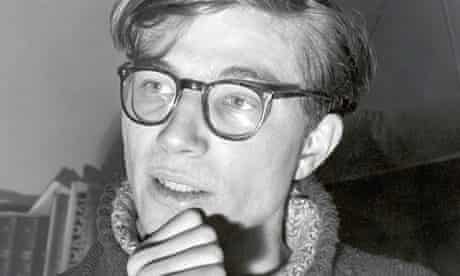
This thought experiment is called quantum suicide. It was first posed by then-Princeton University theorist Max Tegmark in 1997 (now on faculty at MIT). A thought experiment is an experiment that takes place only in the mind.” https://science.howstuffworks.com/innovation/science-questions/quantum-suicide.htm
What this means is that your awareness, your conscious experience, can never not exist. You will always be aware of yourself in some iteration of the world–or, as Lanza states, “The enigmatic issue of death should therefore be understood within the thesis that wave function, relative to an observer and representing his experiences of the world that he lives in, can never cease to exist, and that from an observer’s first-person perspective, there is no death. The observer is always aware of something.” (126) You cannot be aware of yourself as not existing, and since conscious awareness, according to Lanza, is what creates our reality and our worlds in the first place, nonexistence is simply impossible. This, of course, is a very superficial and brief summary of Lanza’s Biocentrism thesis about life creating reality (not the other way around), but the idea that conscious awareness will always play itself out in one form or another is certainly not new or original to Lanza. Whichever theory one chooses to explain the persistence of human consciousness, it remains true that the evidence for our ‘eternity’ is overwhelming. It occurs to me that in the absence of objective time (and this is not a radical idea, but well supported by contemporary physics), all you experience is a continual “now” that appears to change. You can be aware what you believe to be your final moments, but you cannot experience the absence of experience. There is always a conscious observer even in the absence of a supporting, physical system.
What happens, then, when we “lose consciousness”? We never experience the loss; we can’t be aware of no awareness. I remember waking up from my many surgeries. There was no gap in my experience of myself–one moment I was going under and the next, I was coming to in the recovery room. I imagine that death is like that. You are aware of taking your last breath, and then aware of taking your first. The Many Worlds theory creates some fantastic and mind-boggling possibilities here–you could return to a previous state of consciousness in your same body with similar circumstances, or you could wake up as somebody else, but have no idea that you are not simply who you always were. In other words, all consciousness is one and shared; you will experience yourself in a similar way in a variety of bodies, in various circumstances, and at diverse ages. This is where Lanza comes close to the theory of reincarnation, which Biocentrism would explain quite well.
I have had many personal experiences that involve memories of other lives and even an awareness that my lifeline had ‘split’ into another version of myself. In one of my many near death experiences, I remember ‘coming back’ with a sense that I had died after my body shut down due to anaphylaxis (an extreme allergic reaction). Even though my circumstances appeared similar, I noticed slight details that were “off” from my previous sense of myself and my world; I started to wonder if had indeed died in that other world and was now experiencing another reality where my awareness was reinstated in another scenario where I had survived. In fact, every time I woke up from a surgery, an accident, or a near death experience, I had an uncanny feeling that I was starting over, rebooting my awareness in another lifeline. Of course, at the time, I did not have the vocabulary or the theory to understand what that eerie feeling of having died and returned was about, how it could have possibly happened. Biocentrism and the Many Worlds theories make sense of it. Lanza weaves the two theories together to overcome the many objections; namely, that quantum processes do not apply at the macro level of, say, human consciousness. It’s his argument that human consciousness creates the entire scope of reality to begin with, so there is no logical contradiction.
What are the emotional and spiritual implications of never ending awareness? For many, that sounds like a kind of existential torture. We have, however, the gift of forgetting. It’s quite clear to me that to remember everything that we are, to be aware of our multiple iterations or reincarnated selves, would be hellish. Our brains function as reducing valves for consciousness, so that we can focus on a particular set of circumstances and a unique identity. We are limited in our perspective and scope; the mistake mainstream science makes is to assume that our current limitations represent the whole of reality.
There is still a dizzying effect from contemplating the truth of immortality, if by that term you mean continuing conscious awareness. You are always you, in whatever form you may experience yourself. There is no “sweet release”, no oblivion, no end point. There may be a Heaven, but it will be just another world that maybe you will be lucky enough, evolved enough, or conscious enough to experience as your current reality. I don’t know how I feel about this information, but I know that it makes sense of my personal experiences and squares with my intuition about my life. The issue that I have with this never-ending parade of lives and experiences is that sometimes, I just want an end point, a sense that I’ve “arrived” instead of continuous departures towards new (or perhaps the same?) adventures.
How does this knowledge change one’s perspective on the day-to-day reality of existence? Oddly enough, the challenges of living remain the same for me. Knowing that I will always be aware of myself doesn’t alter the fact that life here, right now, is often confusing and difficult. I don’t see quantum immortality or any other kind of immortality as a solution to the challenges and the pain that life continuously throws our way. The fact that said challenges never end is rather overwhelming. I suppose that one outcome could be to see even the most dire of circumstances as simply another scenario in a series of infinite possibilities; perhaps that could take the sting out of the feeling that your one and only world is doomed. Perhaps we are only aware of one set of circumstances because the challenge lies there. We all, individually and collectively, have to learn to care for each other and our planet. Put simply, if we fail this test, we are provided endless opportunities to get it right. But “get it right”, we must. We have created a scenario where our very planet is unable to sustain us. And although the idea that we can perhaps escape this reality seems attractive, I imagine dying and waking up to the same, damn problems that we still haven’t solved.
Until we learn our cosmic lessons, it seems, we are going to live out Groundhog Day for a long, long, time.
–Kirsten A. Thorne, PhD






![Kindred.Spirits.S05E02.Zombie.Boy.720p.WEBRip.x264-KOMPOST[rartv] Torrent download](https://imagecurl.com/images/00631311114691894437_thumb.jpg)




 International Society for Paranormal Research